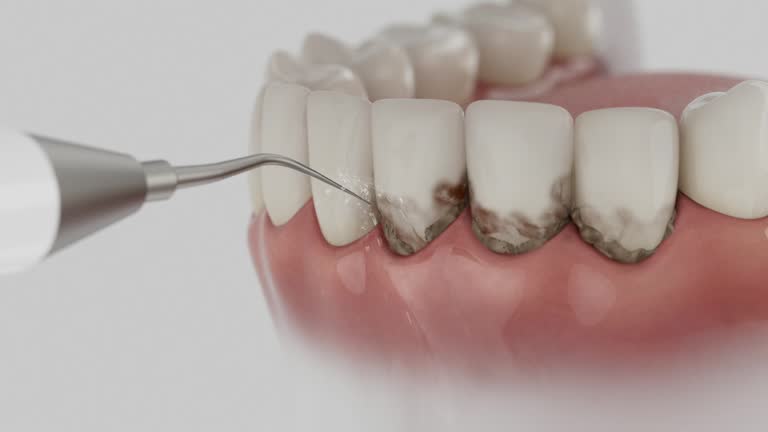
Throbbing pain, especially pain that worsens lying down, is often the first sign a tooth's nerve is infected — our Root Canal Treatment process starts with pulp testing and an X-ray to confirm before recommending anything.

Every Smile Center Dentistry office offering Root Canal Treatment is held to the same four standards, verified before the office ever joins our network.

We won't recommend a root canal unless the diagnostic testing actually supports it.
Rotary files and an apex locator let us clean and shape canals more precisely than older hand-instrument techniques.
Root canals performed under proper local anesthesia are far more comfortable than their reputation suggests.
The root canal and the follow-up crown, when needed, are quoted together so you see the full picture upfront.
Every option below is available under the same upfront-pricing standard, whichever specific service ends up fitting your case.
We rule out referred pain from a neighboring tooth before committing to root canal treatment. This step prevents unnecessary treatment on the wrong tooth.
Most standard cases are completed in one to two visits under local anesthesia. Post-treatment sensitivity typically resolves within a few days.
This step reinforces a tooth that root canal alone wouldn't leave strong enough for normal chewing. The buildup is completed at the same visit as canal filling in most cases.
When a previous root canal has failed or reinfected, retreatment reopens and recleans the canal system. We'll explain honestly if retreatment odds are lower than a first-time procedure.
For patients in acute pain, a same-day pulpotomy can relieve pressure and pain before completing full treatment later. Pain relief is often immediate once infected pulp tissue is addressed.
A crown protects a root-canal-treated tooth from fracture during normal chewing, especially on back teeth. Most crowns are placed within a few weeks of completing the root canal.

Here's exactly what to expect, start to finish, for Root Canal Treatment at any of our affiliated offices.
Phone triage helps us gauge urgency before you even arrive.
We confirm nerve involvement with testing and imaging before recommending root canal treatment.
The plan accounts for the entire process, not just the canal portion.
We track healing and schedule the crown promptly to protect the treated tooth.

We publish these as-is, because that's the only kind of review worth reading before booking Root Canal Treatment.
“Dreaded this for weeks and it turned out to be one appointment with barely any discomfort afterward.”
“They caught that my pain was actually coming from the tooth next door, not the one I thought. Saved me from unnecessary treatment.”
“Emergency pulpotomy got the pain under control the same day, and I finished the full treatment a week later.”
“Retreatment on an old root canal saved a tooth I assumed I'd lose. They explained the odds honestly beforehand.”
“Crown was already factored into the quote, so there was no surprise cost after the canal was finished.”

Straight answers to what people actually want to know before committing to Root Canal Treatment.
Persistent throbbing pain, especially worse at night, usually signals the nerve is involved.
Performed under local anesthesia, most patients describe it as no worse than a routine filling.
Most standard cases are completed in one to two visits; retreatment cases can take longer.
Most back teeth need a crown afterward to prevent fracture during normal chewing.
Retreatment can often still save the tooth by recleaning and refilling the canal system.
Same-day pain relief is a priority even when the complete procedure spans multiple visits.
If you're unsure whether your part of Salem Heights is covered, a quick call settles it faster than searching online.
We provide Root Canal Treatment to Salem Heights patients from diagnosis through crown placement, without referring you elsewhere mid-treatment. Retreatment cases are welcome — we'll give you an honest assessment before recommending anything.